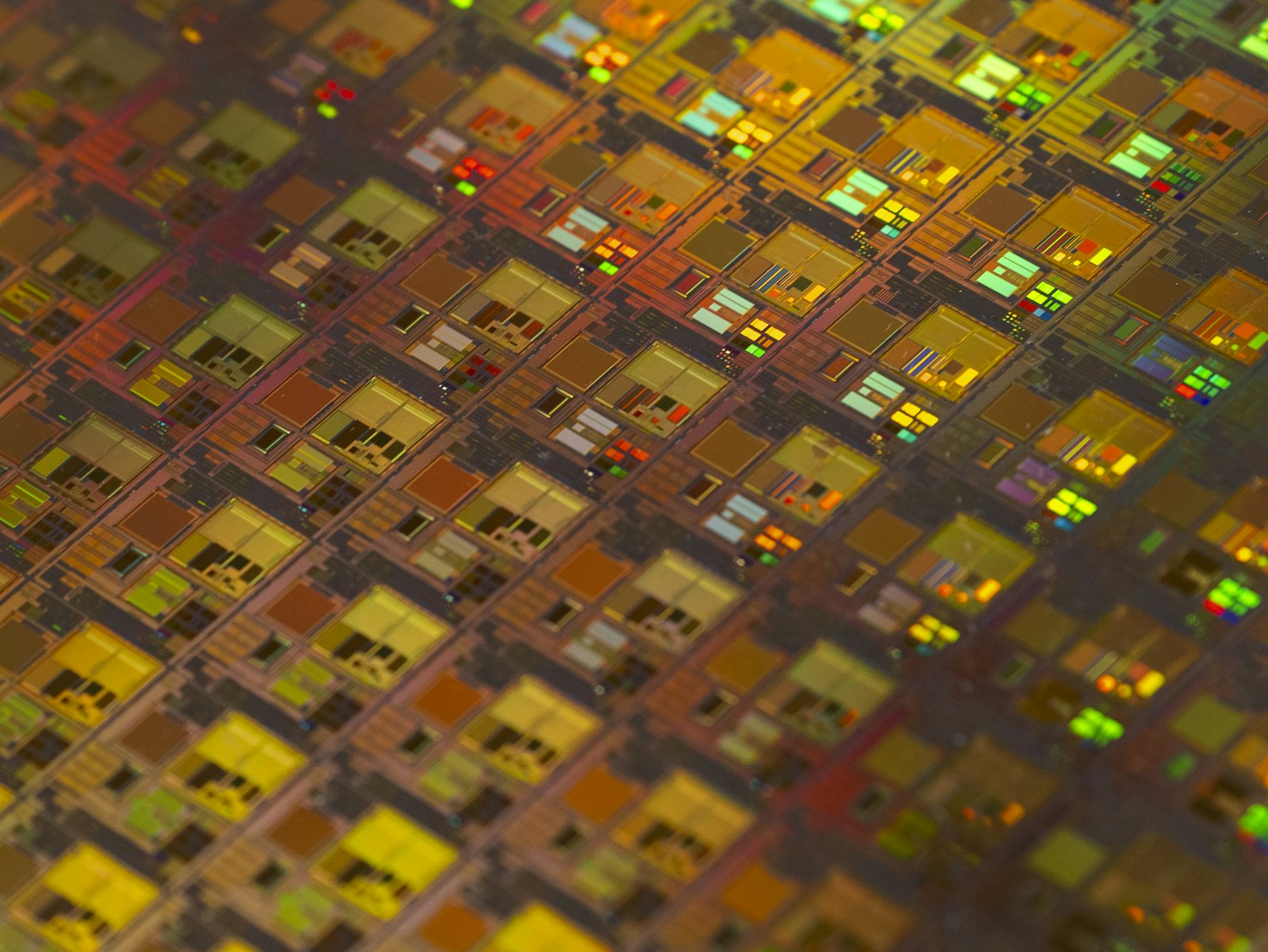
Photo: Maxence Pira via Unsplash. Free to use under the Unsplash License.
Quick Answer: As of November 17, 2026, the Office of the Governor has announced 33 Texas Semiconductor Innovation Fund grants worth about $593.8 million, against roughly $948 million that lawmakers appropriated in 2023 and 2025. The state’s own project listing, dated August 25, 2026, ties the first 32 awards to more than $10.4 billion in planned capital investment and 3,339 direct jobs. That leaves roughly $354 million of appropriated money with no publicly announced recipient.
What is the Texas Semiconductor Innovation Fund?
The Texas Semiconductor Innovation Fund, usually shortened to TSIF, is the state’s incentive program for chip research, design and manufacturing. It was created when Governor Greg Abbott signed the Texas CHIPS Act, House Bill 5174, in June 2023. The same law set up the Texas Semiconductor Innovation Consortium, an advisory panel.
The fund is administered by the Texas CHIPS Office, a division of the Texas Economic Development and Tourism Office inside the Office of the Governor. According to the office, the money can be used in two ways: as matching funds for state entities, including public universities and colleges, and as grants to businesses with an established Texas presence that are planning new or expanded semiconductor projects.
How much money has the Legislature put into the fund?
The Texas CHIPS Office reports two appropriations. Lawmakers provided $698 million in June 2023, and the fund received an additional $250 million in June 2025, for a total of approximately $948 million. Separately, the office notes that the 88th Legislature appropriated more than $660 million for advanced research and development centers at the University of Texas at Austin and Texas A&M University.
| Key fact | Figure |
|---|---|
| Law creating the fund | Texas CHIPS Act (HB 5174), signed June 2023 |
| Total appropriated | About $948 million ($698 million in 2023, $250 million in 2025) |
| Grants announced through November 17, 2026 | 33 |
| Total value of announced grants | About $593.8 million |
| Capital investment tied to first 32 awards | About $10.42 billion |
| Direct jobs tied to first 32 awards | 3,339 |
| Disbursed as of August 25, 2026 | About $35.3 million |
| Appropriated but not publicly announced | Roughly $354 million |
How many grants have been announced, and for how much?
The Office of the Governor publishes a public listing of every announced TSIF project. The most recent version available is dated August 25, 2026, and it shows 32 awards totaling $574,687,427. The listing splits them by state budget period: nine awards worth $68.92 million in fiscal years 2024 and 2025, and 23 awards worth about $505.77 million so far in fiscal years 2026 and 2027.
One more grant has been announced since that listing was published. On November 12, 2026, the Governor announced $19,108,579 for a computing cluster at Texas Tech University in Lubbock. Adding it brings the running total to 33 awards and $593,796,006. Searches of the Governor’s press releases turned up no other TSIF announcement between the Texas Instruments award on July 9, 2026 and the Texas Tech award in November.
Which grants came first, in fiscal years 2024 and 2025?
The first award went to IntelliEPI in Allen on November 14, 2024, nearly a year and a half after the law was signed. Eight more followed through August 2025. The capital investment and job numbers below are the commitments shown on the state listing, not audited results.
| Recipient and location | Grant | Capital investment | Direct jobs |
|---|---|---|---|
| IntelliEPI, Allen | $4.12 million | $41.2 million | 30 |
| Dongjin Semichem, Killeen | $2.4 million | $110.3 million | 24 |
| Silicon Labs, Austin | $23.25 million | $82.9 million | 30 |
| KoMiCo, Round Rock | $2.0 million | $36.0 million | 70 |
| SpaceX, Bastrop | $17.3 million | $282.0 million | 420 |
| DSM Semichem, Plainview | $7.87 million | $176.3 million | 40 |
| Tokyo Electron (TEL), Austin | $3.08 million | $30.8 million | 35 |
| MGC Pure, Killeen | $5.3 million | $150.0 million | 13 |
| Austin Community College, Round Rock | $3.6 million | $25.2 million | Not applicable |
Together these nine projects account for $934.7 million in planned capital investment and 662 direct jobs. The SpaceX award, announced March 12, 2025, supports an expansion of the company’s Bastrop site for printed circuit boards and advanced chip packaging used in Starlink kits.
Which grants have been announced in fiscal years 2026 and 2027?
The pace picked up sharply after the 2025 appropriation. The first award of the new budget period was also the largest in the fund’s history: $250 million to Samsung Austin Semiconductor, announced September 17, 2025, for its fabrication plant in Taylor. The Governor’s office tied that grant to more than $4.73 billion in capital investment and a shift toward 2-nanometer logic chips. No job figure is attached to the Samsung award on the state listing.
| Recipient and location | Grant | Capital investment | Direct jobs |
|---|---|---|---|
| Samsung, Taylor | $250.0 million | $4.73 billion | 0 listed |
| Yerico Manufacturing, Elgin | $1.3 million | $13.1 million | 30 |
| Temple College, Taylor | $9.8 million | $19.7 million | Not applicable |
| UT Texas Quantum Institute, Austin | $4.8 million | $42.0 million | Not applicable |
| Prairie View A&M University, Prairie View | $1.98 million | $5.2 million | Not applicable |
| Texas State Technical College, Hutto | $3.53 million | $9.6 million | Not applicable |
| Tekscend Photomask, Round Rock | $15.2 million | $223.9 million | 50 |
| Texas Tech nanofabrication center, Lubbock | $12.0 million | $24.0 million | Not applicable |
| LTD Material, Austin | $1.01 million | $26.3 million | 40 |
| Coherent, Sherman | $14.08 million | $154.1 million | 38 |
| Arm, Austin | $4.16 million | $71.0 million | 320 |
| MP 10X Development, Northlake | $53.46 million | $1.12 billion | 207 |
| University of Texas at Dallas | $0.7 million | $1.4 million | Not applicable |
| Texas Tech ultra-wide bandgap research, Lubbock | $4.52 million | $21.1 million | Not applicable |
| Avant Technology, Pharr | $4.83 million | $21.3 million | 250 |
| Applied Optoelectronics, Sugar Land | $20.85 million | $279.2 million | 500 |
| Texas A&M Cyclotron Institute, College Station | $13.0 million | $29.2 million | Not applicable |
| USA Rare Earth, Hudspeth County | $14.18 million | $1.44 billion | 260 |
| Soulbrain RASA TX, Taylor | $11.6 million | $120.3 million | 20 |
| Schunk Xycarb, Georgetown | $3.9 million | $42.4 million | 25 |
| Quantum Global Technologies, Austin | $3.07 million | $43.9 million | 287 |
| FormFactor, Farmers Branch | $24.2 million | $341.0 million | 650 |
| Texas Instruments, Richardson | $33.6 million | $700.0 million | 0 listed |
| Texas Tech computing cluster, Lubbock | $19.11 million | Not stated | Not applicable |
The first 23 rows of this table come from the August 25, 2026 listing, which totals them at about $9.48 billion in capital investment and 2,677 direct jobs. The final row comes from the Governor’s November 12, 2026 press release, which did not give a total project cost.
Where is the money going?
Who received the largest grants?
The fund is top-heavy. Samsung’s $250 million is about 42 percent of every dollar announced so far. The five largest awards, to Samsung, MP 10X Development, Texas Instruments, FormFactor and Silicon Labs, add up to roughly $384.5 million, or close to 65 percent of the total.
The fund also reaches beyond chip fabrication. Two of the larger commitments went to rare earth projects: $53.46 million for the MP 10X magnet manufacturing campus in Northlake and $14.18 million for USA Rare Earth’s Round Top Mountain project in Hudspeth County, which the Governor’s office described as a source of heavy rare earth elements and technology metals.
How much has gone to colleges and universities?
Ten of the 33 awards went to public higher education institutions, for a combined total of about $73 million. They fund cleanrooms, workforce training programs, metrology, radiation effects testing and computing. Texas Tech University has received three separate awards totaling about $35.6 million. The remaining 23 awards, worth about $520.8 million, went to companies.
Which parts of Texas have benefited most?
Central Texas dominates the map. Sixteen of the 33 awards are for projects in the Austin region, from Bastrop and Elgin through Austin, Round Rock, Hutto, Taylor and Georgetown, and two more are in Killeen. North Texas has six, in Allen, Sherman, Northlake, Dallas, Farmers Branch and Richardson. Lubbock has three, all at Texas Tech. Single awards reached Plainview, Prairie View, Pharr, Sugar Land, College Station and Hudspeth County.
How does the fund work in practice?
Who can apply?
The Texas CHIPS Office keeps separate applications for private companies and for state entities or institutions of higher education. A business applicant must have an established Texas presence, be in a position to advance or sustain the state’s semiconductor leadership, make a capital investment and create jobs. Applicants also have to attest that the local community is aware of the proposed project, and the consortium’s executive committee considers whether local economic incentives are part of the package.
Who oversees the program?
The consortium includes designees from 20 Texas higher education institutions. Its executive committee has three members appointed by the Governor, two appointed by the Lieutenant Governor and two by the Speaker of the House, along with the chancellors of the Texas A&M and University of Texas systems or their designees. The Texas CHIPS Office supports the consortium, helps administer the fund and must deliver a written report every two years to the Governor and the Legislative Budget Board.
How much money has actually been paid out?
Far less than has been announced. The August 25, 2026 listing shows about $35.35 million disbursed to date: roughly $22.1 million to projects from the first budget period and about $13.25 million to projects from the second. That is about 6 percent of the $574.7 million in awards on the listing. Ten of the 32 projects had received any money at that point, and only MGC Pure in Killeen had drawn its full grant, $5.3 million.
The gap suggests grants are paid over time rather than at announcement. The listing also carries columns for liquidated damages, labeled as clawbacks, and for other repayments. Every entry in those columns was zero as of August 25, 2026, and the listing shows no disbursed funds returned.
What remains in the fund?
Subtracting the $593.8 million in announced awards from the roughly $948 million appropriated leaves about $354 million. That figure is an estimate based on public announcements. The state has not published an uncommitted balance, and the number does not account for administrative costs or for any awards approved but not yet announced.
The spending pattern is worth noting. Only $68.92 million was awarded in the fund’s first budget period, so most of the original $698 million carried forward. Since September 2025, announced awards have reached about $524.9 million, more than double the $250 million added in 2025. The state has made no public statement on how quickly the rest will be awarded.
Brian’s Take
What stands out to me is how concentrated this fund is. One grant to Samsung is 42 percent of the money announced, and five recipients account for nearly two thirds. That is not necessarily a flaw, because a leading-edge fab is the kind of project that anchors suppliers, and you can see those suppliers further down the list in Taylor, Round Rock, Georgetown and Killeen. But it does mean the program’s results will depend heavily on a small number of very large projects.
I would also separate announcements from cash. The state had paid out about $35 million of the $575 million on its August listing, around 6 percent. For a taxpayer, that is a reasonable structure: the money appears to follow progress rather than press releases.
The smaller rows are the ones I find most interesting. A $700,000 cleanroom in Dallas, training programs in Hutto and Taylor, a 250-job project in Pharr and chemical plants in Plainview and Killeen suggest the state is trying to build a supply chain and a workforce, not just land headline fabs. With roughly $354 million still unannounced, how that balance is split between big names and that supporting layer is the thing I would watch.
Frequently Asked Questions
How much money is in the Texas Semiconductor Innovation Fund?
The Texas CHIPS Office reports appropriations of $698 million in June 2023 and $250 million in June 2025, for a total of approximately $948 million.
How many TSIF grants have been awarded?
The Office of the Governor has announced 33 grants as of November 17, 2026. Thirty-two appear on the state’s August 25, 2026 public listing, and one more, to Texas Tech University, was announced on November 12, 2026. Together they total about $593.8 million.
What is the largest TSIF grant?
The largest is $250 million to Samsung Austin Semiconductor for its fabrication plant in Taylor, announced September 17, 2025. The next largest is about $53.46 million for the MP 10X Development rare earth magnet project in Northlake.
Who runs the fund?
The Texas CHIPS Office, a division of the Texas Economic Development and Tourism Office within the Office of the Governor, administers it.
How much of the fund is left?
Based on public announcements, about $354 million of the roughly $948 million appropriated has not been tied to a named recipient. The state has not published an official remaining balance, so that figure is an estimate.
Sources and Further Reading
- Texas Semiconductor Innovation Fund (TSIF) Announced Projects Public Listing, as of August 25, 2026, Office of the Governor of Texas
- Texas Semiconductor Innovation Fund program page, Texas Economic Development and Tourism Office, Office of the Governor
- Texas CHIPS Office page, Texas Economic Development and Tourism Office, Office of the Governor
- Governor Abbott Announces Texas Semiconductor Innovation Fund Grant To Texas Tech University (November 12, 2026), Office of the Governor of Texas
- Governor Abbott Announces Texas Semiconductor Innovation Fund Grant To Samsung Austin Semiconductor (September 17, 2025), Office of the Governor of Texas
- Governor Abbott Announces Texas Semiconductor Innovation Fund Grant To SpaceX (March 12, 2025), Office of the Governor of Texas
- Governor Abbott Announces Texas Semiconductor Innovation Fund Grant To USA Rare Earth (May 12, 2026), Office of the Governor of Texas
- Governor Abbott Announces Texas Semiconductor Innovation Fund Grant To AOI (April 29, 2026), Office of the Governor of Texas
- Governor Abbott Announces Texas Semiconductor Innovation Fund Grant To FormFactor (July 2, 2026), Office of the Governor of Texas
- Governor Abbott Announces Texas Semiconductor Innovation Fund Grant To Texas Instruments (July 9, 2026), Office of the Governor of Texas