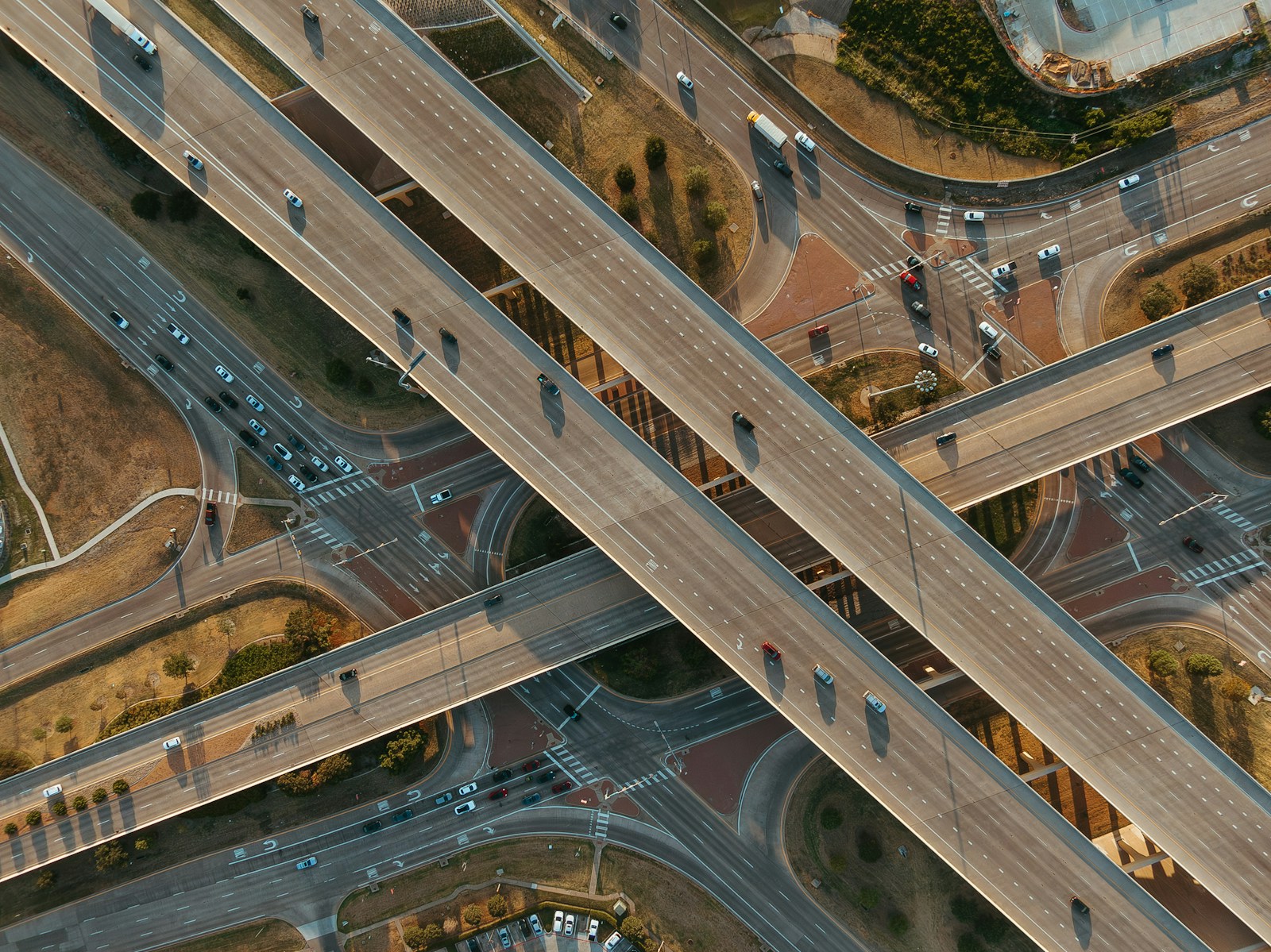
Photo: Daniel / Unsplash (Unsplash License)
Quick Answer: As of October 29, 2026, the Texas Department of Motor Vehicles listed 17 companies holding state authorizations covering 3,164 automated vehicles, with Waymo (1,259) and Tesla (1,080) accounting for about 74 percent of the total. Authorization became mandatory on May 28, 2026 under Senate Bill 2807, and robotaxis now carry public riders in Austin, Dallas, Houston, San Antonio and Fort Worth. Driverless and supervised autonomous trucks are also hauling freight on the Dallas-Houston, Dallas-Laredo and Fort Worth-Phoenix corridors.
How many driverless vehicles are authorized in Texas right now?
For the first time, Texas has an official count. The Texas Department of Motor Vehicles (TxDMV) publishes a company and vehicle summary drawn from its Texas Motor Carrier Credentialing System, and the report dated October 29, 2026 lists 17 companies and 3,164 automated vehicles under state authorization.
The count is concentrated. Two robotaxi operators, Waymo and Tesla, hold 2,339 of the 3,164 vehicles, or about 74 percent. Add Avride, the third-largest holder with 344 vehicles, and the top three account for roughly 85 percent. The remaining 14 companies, a group that includes the best-known autonomous trucking developers, share 481 vehicles between them.
| Company (as listed by TxDMV) | Vehicles, Oct. 29, 2026 | Share of total |
|---|---|---|
| Waymo LLC | 1,259 | 39.8% |
| Tesla Robotaxi, LLC | 1,080 | 34.1% |
| Avride | 344 | 10.9% |
| Aurora Operations Inc. | 91 | 2.9% |
| Gatik AI Incorporated | 64 | 2.0% |
| Zoox, Inc. | 63 | 2.0% |
| Nuro Inc. | 47 | 1.5% |
| Fountainhead Logistics LLC (Atlas Energy Solutions) | 38 | 1.2% |
| Kodiak Robotics Inc. | 36 | 1.1% |
| Torc Robotics Inc. | 32 | 1.0% |
| Stack Opco LLC | 31 | 1.0% |
| May Mobility Inc. | 22 | 0.7% |
| Bot Auto TX Inc. | 13 | 0.4% |
| Waabi Logistics Inc. | 13 | 0.4% |
| MOIA America | 12 | 0.4% |
| PlusAI Inc. | 12 | 0.4% |
| International Transport Engineering LLC | 7 | 0.2% |
| Total: 17 companies | 3,164 | 100% |
Source: TxDMV AV Authorizations report, data as of October 29, 2026. Shares are calculated from the TxDMV counts and rounded.
Does the state count show how many robotaxis are actually on the road?
No. The register shows vehicles a company has placed under its authorization, not vehicles carrying passengers or freight on a given day. The figures measure capacity, not daily activity.
How fast is the count growing?
Quickly, and Tesla is the main reason. When enforcement began on May 28, 2026, press reports based on the TxDMV data put Waymo at about 600 vehicles and Tesla at 42. Five months later the official report showed Waymo at 1,259 and Tesla at 1,080. EVwire, which tracks the register, reported that Tesla passed Waymo on November 10, and that as of November 11 Tesla had 1,302 registered vehicles to Waymo’s 1,297, with the statewide total at 3,424. By its count, Tesla’s fleet consisted of 729 Model Ys and 573 Cybercabs.
Which Texas cities have robotaxi service?
Where does Waymo operate in Texas?
Waymo began offering rides in Austin through the Uber app in March 2025, and in 2026 it expanded to Dallas, Houston and San Antonio, where service began in February. On September 24, 2026, Spectrum News reported that Waymo was adding fully autonomous freeway trips in Austin, covering MoPac Expressway, Interstate 35, U.S. 183 and U.S. 290. It was the first time the company had offered driverless freeway trips to riders in Texas.
Where does Tesla operate in Texas?
Tesla launched its Robotaxi service in Austin in June 2025 with about a dozen cars, each carrying a human safety monitor, and began offering rides without a monitor in some Austin vehicles in January 2026. It expanded to Dallas and Houston in April 2026, opened Fort Worth on November 2, 2026, and started San Antonio on November 9, 2026. Local reporting described the San Antonio zone as more than 270 square miles, served by Model Y vehicles with no safety driver aboard. The same report noted that tracking sites estimated only about seven Tesla vehicles were operating in San Antonio at launch. On its third-quarter 2026 earnings call, Tesla said Cybercab rides would begin in Dallas in November.
What about Zoox, Avride and the others?
Zoox, owned by Amazon, has 63 vehicles on the Texas register. In Austin its rides have been limited to employees and their friends and family since March 25, 2026, and a public early-rider program has been announced for later in 2026 without a date, according to a robotaxi city guide verified November 9. Avride holds the third-largest authorization at 344 vehicles, which EVwire identifies as Hyundai Ioniq 5s. Nuro (47 vehicles), May Mobility (22) and Volkswagen’s MOIA America (12) round out the passenger-oriented names on the list.
Are driverless trucks really running on Texas interstates?
Yes, though the fleets are small next to the robotaxi numbers and some runs still carry a person in the cab. Texas freight lanes link Dallas-Fort Worth, Houston, El Paso and the border crossing at Laredo, which Aurora describes as the busiest land port in the Western Hemisphere, handling about 40 percent of U.S.-Mexico freight.
What has Aurora reported?
Aurora Innovation, with 91 vehicles on the state register, first deployed driverless trucks in April 2025 between Dallas and Houston. In February 2026 it said a software release had tripled its driverless network to 10 routes, naming Dallas-Houston, Fort Worth-El Paso, El Paso-Phoenix, Dallas-Laredo and the roughly 1,000-mile Fort Worth-Phoenix lane. The release added validation for rain, fog and heavy wind, after bad weather limited its Texas driverless operations roughly 40 percent of the time in 2025. Aurora then reported 250,000 driverless miles as of January 2026 with zero collisions attributed to its system.
In its third-quarter 2026 shareholder letter, Aurora said it passed 500,000 commercial driverless miles in September 2026 and reported quarterly revenue of $3 million. The scale-up has moved more slowly than first planned: in February the company expected more than 200 driverless trucks in operation by the end of 2026, while the October letter said it expects to exceed 200 by the end of February 2027 and 1,000 by the end of 2027. Charger Logistics, which runs the Dallas-Laredo lane with Aurora, signed a non-binding memorandum of understanding for 500 trucks with deliveries expected in 2027 and 2028. Supplier AUMOVIO is finalizing a hardware production line in New Braunfels.
What about Kodiak and Waabi?
Kodiak AI reported third-quarter 2026 results on November 5. Its customer Atlas Energy Solutions, whose logistics arm appears on the TxDMV list with 38 vehicles, had a fleet of 37 customer-owned unsupervised autonomous trucks at quarter-end. Kodiak reported more than 58,000 cumulative paid driverless hours, nearly 30,000 loads delivered and quarterly revenue of $2.97 million. It is targeting a year-end launch of unsupervised long-haul service, has named IKEA Supply as the first partner for that service on the Dallas-to-Houston corridor, and has started commercial freight with Charger Logistics between Dallas and Laredo.
Waabi is earlier in the process. On October 5, 2026, Volvo Autonomous Solutions and Waabi announced the start of customer operations on the Dallas-Houston corridor for freight network Warp, using the Volvo VNL Autonomous truck. Volvo stated that those hauls currently run with an observer in the driver’s seat. Waabi holds 13 vehicles on the Texas register.
What does Texas law require of driverless operators?
Senate Bill 2807, passed by the 89th Texas Legislature in 2025, created the state’s first authorization requirement for commercial driverless operations. The law took effect September 1, 2025. TxDMV and Department of Public Safety rules took effect February 27, 2026, applications opened in April, and authorization became mandatory on May 28, 2026, 90 days after the final rules.
The requirement applies to companies that move passengers or property for a business on Texas roads without a human driver. Personal-use vehicles are not covered. An applicant must confirm that each vehicle can comply with Texas traffic laws, carries a recording device, has an automated driving system that meets federal law, can reach a minimal risk condition if the system fails, is registered and titled in Texas, and has the required liability coverage or self-insurance. The company must also certify that the Department of Public Safety has received its plan for how first responders should interact with the vehicles.
There is no fee, and an authorization does not expire. Holders must report material changes within 30 days and add or remove vehicles as fleets change. Cities still cannot write their own autonomous vehicle rules.
What can the state do if a vehicle is unsafe?
TxDMV can suspend, revoke, cancel or restrict an authorization when a vehicle’s operation has caused or is likely to cause serious bodily injury. The agency first gives the company a set time to correct the problem; if no fix is certified, TxDMV issues a decision that the company can appeal to the State Office of Administrative Hearings. Roadside traffic enforcement stays with state troopers and local police. Since May 28, the public has been able to file safety complaints and check whether a company is authorized through a TxDMV lookup page.
What does the safety record show so far?
Waymo’s public safety hub reports 271.3 million rider-only miles nationwide through June 2026, including 21.064 million in Austin. For Austin, Waymo reports 0.52 crashes with any reported injury per million miles against a human benchmark of 3.25, a difference of about 84 percent, and zero crashes involving serious injury or worse against a benchmark of 0.17. These comparisons are Waymo’s own modeling against the general driving population.
Texas also produced the year’s most visible failure. On April 20, 2026, an unoccupied Waymo vehicle in San Antonio was swept into Salado Creek during heavy rain; another had been stranded in floodwater earlier that month. No one was hurt. Waymo filed a software recall with the National Highway Traffic Safety Administration (NHTSA) covering nearly 3,800 vehicles, and the recall notice said the vehicle detected the flooded road but continued at reduced speed. Rider service in San Antonio resumed on September 17, 2026 after software changes and new location-specific limits.
For Tesla, reporting based on NHTSA filings found 14 crash incidents involving its Austin robotaxis in about the first eight months of service, most listing only property damage. A later EVwire review counted 17 incidents between July 2025 and March 2026.
Brian’s Take
As a former investment manager and analyst, the first thing I would say about 3,164 is that it is a capacity number, not a revenue number. The state is telling us how many vehicles companies have put on paper. An estimated seven Teslas working a 270-square-mile zone in San Antonio tells you how far apart those two things can be.
What I find more telling is the trucking side. Aurora took in $3 million in a quarter and Kodiak $2.97 million, and Aurora’s 200-truck milestone slipped from the end of 2026 to February 2027. That is what an early commercial business looks like. But Texas businesses that ship freight between Dallas, Houston and Laredo should plan around what is running today, which is dozens of trucks, not thousands.
The piece I would watch is the rulebook. Texas chose a light structure: no fee, no expiration, self-certification, and a state agency that can pull an authorization. The flood incident in San Antonio was the first real test of how operators respond when something goes wrong. To my eye, how that enforcement power gets used will matter more to the industry’s standing here than the next thousand registrations.
Frequently Asked Questions
How many companies are authorized to run driverless vehicles in Texas?
Seventeen, according to the TxDMV report dated October 29, 2026. Together they listed 3,164 automated vehicles.
Which company has the most driverless vehicles in Texas?
Waymo led the official October 29 report with 1,259 vehicles to Tesla’s 1,080. EVwire’s tracking of the register showed Tesla moving ahead on November 10, with 1,302 vehicles to Waymo’s 1,297 as of November 11.
When did Texas start requiring authorization for driverless vehicles?
May 28, 2026. SB 2807 took effect September 1, 2025, and enforcement began 90 days after the rules took effect on February 27, 2026.
Can Texas cities ban or regulate robotaxis?
No. Regulation sits at the state level. TxDMV issues and can revoke authorizations, while the Department of Public Safety and local police enforce traffic laws on the road.
Are fully driverless trucks operating between Dallas and Houston?
Aurora has run driverless trucks on that corridor since April 2025. Kodiak plans unsupervised long-haul service there with a targeted year-end launch, and Waabi’s runs with Volvo currently carry an observer.
Sources and Further Reading
- AV Authorizations report, October 29, 2026 – Texas Department of Motor Vehicles
- Automated Vehicles Regulatory Program – Texas Department of Motor Vehicles
- Texas Begins Enforcement of Commercial Automated Vehicle Requirements – Texas Department of Motor Vehicles
- Third Quarter 2026 Shareholder Letter – Aurora Innovation
- Aurora Triples Driverless Network to 10 Routes – Aurora Innovation
- Value Truck to Deploy Aurora’s Second-Generation Driverless Trucks – Aurora Innovation
- Third Quarter 2026 Financial Results – Kodiak AI
- Volvo and Waabi kick off customer operations in Texas – Volvo Group
- Safety Impact data hub – Waymo
- Tesla overtakes Waymo in Texas robotaxi registrations – EVwire
- Waymo dominates Texas autonomous vehicle registrations as Tesla trails behind – TechCrunch
- Waymo expands fully autonomous freeway rides in Austin – Spectrum News
- Tesla robotaxi debuts in San Antonio, opening 270-square-mile service zone – News 4 San Antonio
- Tesla Opens Robotaxi Rides in Fort Worth – Tesla North
- Waymo recalls almost 3,800 robotaxis after flooding incident in San Antonio – Texas Public Radio
- Waymo rides resume in San Antonio after floodwater safety updates – News 4 San Antonio
- Tesla’s Austin Robotaxis Report 14 Crashes in First Eight Months – Bloomberg via Claims Journal
- New Texas law tightens oversight on self-driving car companies – KXAN
- Austin robotaxi city guide – The Charge Port