Image: NASA via Wikimedia Commons, Public domain.
Texas has produced large chip, software and space companies. Apptronik is a heavily funded Texas bet on a newer category: general-purpose humanoid robots meant to work in warehouses and factories. The company began in a University of Texas at Austin research lab in 2016 and spent years building robots for others, including work tied to NASA. In the past 21 months it has raised nearly $1 billion, signed up industrial partners and started building the data operation it says its robots need to learn real jobs. This report lays out what the company has disclosed and what remains unknown. All figures are as of November 20, 2026.
How Much Money Has Apptronik Raised?
Apptronik announced on February 11, 2026, that it had closed a $520 million extension to its Series A, which it calls a Series A-X. The company said the total Series A now exceeds $935 million and that it has raised nearly $1 billion since its founding.
The round was built in stages. On February 13, 2025, the company announced a $350 million Series A co-led by B Capital and Capital Factory, with participation from Google, according to The Robot Report. In March 2025 the raise was expanded to $403 million, Dallas Innovates reported, citing the company. The company’s own February 2026 release puts the initial Series A at $415 million, which together with the $520 million extension produces the $935 million total.
| Date | Event | Amount | Investors named |
|---|---|---|---|
| Feb. 13, 2025 | Series A announced | $350 million | B Capital and Capital Factory (co-leads), Google |
| March 2025 | Series A expanded | $403 million | Not detailed in company statements reviewed |
| By Feb. 2026 | Initial Series A total | $415 million | Per company release |
| Feb. 11, 2026 | Series A-X extension | $520 million | B Capital, Google, Mercedes-Benz, PEAK6; new: AT&T Ventures, John Deere, Qatar Investment Authority |
| Total | Series A | More than $935 million |
Sources: Apptronik press release, February 11, 2026; The Robot Report; Dallas Innovates.
Who invested in the extension?
The company named four returning investors in the extension: B Capital, Google, Mercedes-Benz and PEAK6. It named three new ones: AT&T Ventures, the venture arm of AT&T; equipment maker John Deere; and the Qatar Investment Authority. Neither the company’s release nor The Robot Report’s coverage named a lead investor for the extension.
What is Apptronik worth?
The company has not published a valuation. It said only that the extension was priced at three times the valuation of the original Series A. Dallas Innovates reported a post-money valuation of roughly $5.3 billion, attributing the figure to TechCrunch. Research firm Sacra lists a valuation of $5.5 billion. Readers should treat both as third-party reports and not as company-confirmed figures.
What Is Robot Park?
On June 30, 2026, Apptronik announced Robot Park, which it describes as its flagship data collection and training facility for humanoid robots. The newly expanded Austin site covers nearly 90,000 square feet. The company first described plans for an Austin data facility under that nickname in February 2025, according to The Robot Report, and its February 2026 release said part of the new funding would pay for facilities for robot training and data collection.
The purpose is to generate the data that artificial intelligence models need to control a robot’s body. Apptronik said the facility combines teleoperation, in which human operators guide robots through tasks, with autonomous runs and physics simulation. Technology publication eWeek described the site as a production-scale learning environment as opposed to a traditional research lab, and reported that the chief executive has framed the company as running two factories, one that produces robots and one that produces data.
The company said the Austin site anchors a growing network of Robot Parks at customer and partner locations, that similar data collection setups operate at Google DeepMind, Mercedes-Benz and GXO, and that it plans to open locations in additional cities soon. It did not name those cities. It also did not disclose how many robots, training stations or operators work at the Austin facility.
What Is Apollo 2?
Apollo 2 is the current version of Apptronik’s humanoid robot, unveiled alongside Robot Park on June 30, 2026. It comes in two configurations. A wheeled-base version is designed to meet existing safety standards for industrial mobile robots and is aimed at stable industrial settings. A bipedal version, which walks on two legs, is intended for more complex environments built for people, and the company is using it to refine the safety and reliability of walking.
The company said Apollo 2 had been the workhorse behind Robot Park for more than a year before the public unveiling and that fleets are operating at Robot Park and at customer and partner sites. It did not publish specifications, pricing, production volumes or a manufacturing location for Apollo 2 in the announcement.
How capable is the Apollo robot?
For the Apollo platform generally, Sacra’s company profile lists a height of 5 feet 8 inches, a weight of 160 pounds and a payload of up to 55 pounds. It describes a modular design in which the upper body, containing the battery and computer, can be mounted on legs, a wheeled base or a fixed pedestal. Sacra also reports that the company is targeting a bill-of-materials cost under $50,000, which is a manufacturing cost goal and not a sale price. These details come from a third-party profile and were not restated in the company’s 2026 releases.
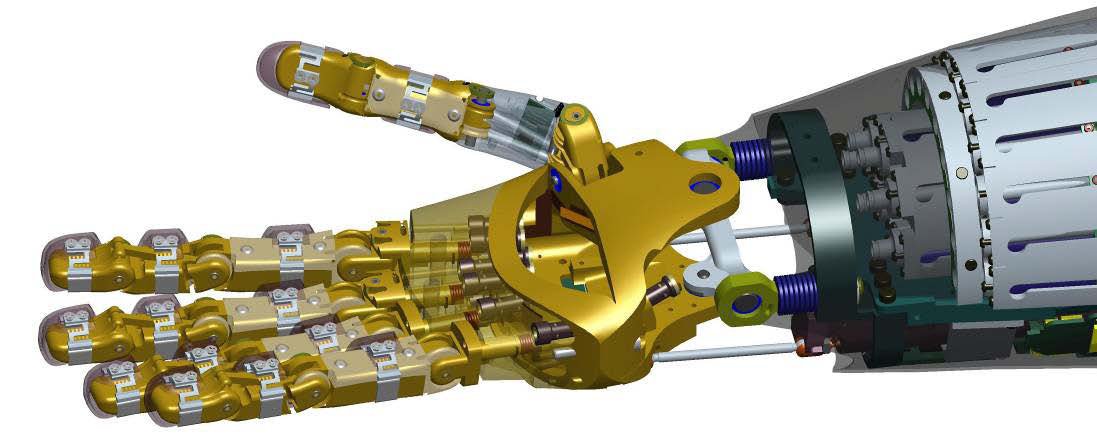
Apptronik says Apollo draws on 15 earlier robots the team has built, including NASA’s Valkyrie humanoid.
When will a commercial robot ship?
The company’s February 2026 release said a new robot was set to debut in 2026, and Apollo 2 followed in June. In the June announcement, Apptronik identified Apollo 3 as its next commercial product and said data gathered with Apollo 2 is meant to give that robot stronger capabilities out of the box. It gave no date. eWeek characterized Apollo 3 as the company’s first fully commercial product built for scale.
Chief Executive Jeff Cardenas, as quoted by Dallas Innovates in February, said industrial pilots would run through 2026, with broader scaling in 2027 and beyond.
Who Are Apptronik’s Partners and Customers?
The company’s releases name three main commercial and research relationships. Google DeepMind is its research partner, and Apollo is powered by Gemini Robotics, DeepMind’s family of artificial intelligence models for robots. The partnership was announced in late 2024, according to The Robot Report, and data from Apollo 2 is being used to advance those models.
Mercedes-Benz is both an investor and a customer. The Robot Report reported in 2025 that the automaker had agreed to test Apollo, and Sacra reports the testing involves moving parts and checking component quality at a Mercedes campus in Berlin. GXO Logistics, a large contract logistics company, has an agreement to test Apollo in real-world operations. The February release also listed a partnership with contract manufacturer Jabil.
John Deere and AT&T Ventures joined as investors in February 2026. The company’s materials do not describe commercial deployments with either. The company says its work covers logistics, manufacturing and retail uses.
| Organization | Role |
|---|---|
| Google and Google DeepMind | Investor; research partner supplying Gemini Robotics models |
| Mercedes-Benz | Investor; testing Apollo in manufacturing |
| GXO Logistics | Customer testing Apollo in logistics |
| Jabil | Partner named in February 2026 release |
| B Capital, Capital Factory, PEAK6 | Investors |
| AT&T Ventures, John Deere, Qatar Investment Authority | New investors, February 2026 |
Where Did Apptronik Come From?
Apptronik was founded in 2016 out of the Human Centered Robotics Lab at the University of Texas at Austin. Dallas Innovates identifies Jeff Cardenas and Nicholas Paine as co-founders. Austin’s Capital Factory co-led the Series A, and its chairman, Gordon Daugherty, was the company’s first outside board director, according to The Robot Report.
The company’s early years were spent on contract work. Dallas Innovates reports that it built exoskeletons for U.S. Special Forces, and The Robot Report says the company partnered with NASA in 2022 to advance humanoid robots, building on earlier work on Valkyrie. The Robot Report also notes that Apptronik won an RBR50 Robotics Innovation Award in 2024 for its custom linear actuators, the components that move a robot’s joints, and that it worked with NVIDIA on dexterous manipulation that year.
Sacra reports that Apptronik also owns Elevate Robotics, a subsidiary focused on industrial automation that is not humanoid in form.
How many people work at Apptronik?
The company reported nearly 300 employees in February 2026 and more than 350 in its June 30, 2026, announcement, an increase of at least 50 in under five months. Sacra noted that the February figure was roughly double the headcount at the time of the initial Series A a year earlier.
| Headquarters | Austin, Texas |
| Founded | 2016, from the University of Texas at Austin Human Centered Robotics Lab |
| Chief executive | Jeff Cardenas |
| Capital raised | Nearly $1 billion; Series A of more than $935 million |
| Reported valuation | About $5.3 billion to $5.5 billion (third-party reports) |
| Employees | More than 350 (June 2026) |
| Current robot | Apollo 2, wheeled and bipedal versions |
| Robot Park | Nearly 90,000 square feet, Austin |
What Is Still Unknown?
Several of the numbers that would let outsiders judge the business have not been disclosed. None of the company materials or coverage reviewed for this report gives a revenue figure, a production volume target, a unit price or a count of robots deployed with customers. The company has not said where Apollo 3 will be manufactured or when it will ship.
There are also inconsistencies in the public record. The Robot Report said in February 2025 that Apptronik had raised $378 million since its founding, including the $350 million round, while Sacra says about $86 million was raised before the Series A. The stated use of the 2026 funding is specific: ramping Apollo production, expanding pilot and commercial deployments, building training and data facilities, and developing the next robot.
Brian’s Take
As a former investment manager and analyst, I look first at what a young company chooses to measure. Apptronik is not reporting revenue or units shipped. It is reporting square footage of training space, headcount and the names on its investor list. That tells me the company sees itself as still in the build phase, and its own chief executive has said broader scaling is a 2027-and-beyond story.
The investor list is the part I find most informative. Mercedes-Benz, John Deere, AT&T’s venture arm and Google are operating companies with factories, networks and logistics of their own. When prospective customers put money in at three times the earlier valuation, they are signaling that they want the product to exist. It does not prove the product works at scale.
For Texas, the plain fact is that nearly $1 billion has been committed to a company that started in a University of Texas lab and has kept its headquarters and its main data facility in Austin. Whether that turns into manufacturing jobs here is not answered by anything the company has published so far.
Frequently Asked Questions
How much funding has Apptronik raised?
Nearly $1 billion in total, according to the company. Its Series A exceeds $935 million after a $520 million extension announced February 11, 2026.
Where is Apptronik located?
Austin, Texas. Its Robot Park data collection and training facility, at nearly 90,000 square feet, is also in Austin.
What is Apollo 2?
The current version of Apptronik’s humanoid robot, unveiled June 30, 2026, in wheeled and two-legged configurations. The company has not published its specifications or price.
Who are Apptronik’s investors?
Named investors include B Capital, Capital Factory, Google, Mercedes-Benz, PEAK6, AT&T Ventures, John Deere and the Qatar Investment Authority.
What is Apptronik’s valuation?
The company has not disclosed one. Third-party reports put it at about $5.3 billion to $5.5 billion after the February 2026 extension.
When will Apptronik sell robots commercially?
The company calls Apollo 3 its next commercial product but has given no date. Its chief executive said in February 2026 that pilots would run through 2026, with broader scaling in 2027 and beyond.
Sources and Further Reading
- Apptronik Closes Over $935 Million Series A with New $520 Million Extension Round, Apptronik
- Welcome to Robot Park: Where Apptronik’s Apollo Goes to Work, Apptronik
- Apptronik Brings in Another $520M to Ramp Up Apollo Production, The Robot Report
- Apptronik Raises $350 Million to Build Humanoids, The Robot Report
- AT&T Ventures Among New Backers as Humanoid Robotics Startup Apptronik Nears $1B in Total Funding, Dallas Innovates
- Apptronik Debuts New Apollo 2 Humanoid, Launches 90,000-Square-Foot Robot Park, eWeek
- Apptronik company profile, Sacra